
The Centre for Quantum and Society (CQS), in collaboration with QDNL and Leiden University, published a new vision paper, From Quantum Enthusiasm to Quantum Engagement, outlining a new approach to communicating quantum science and technology (QS&T). The paper argues that as quantum technologies move closer to societal application, communication must evolve beyond raising awareness and enthusiasm towards building trust, dialogue and meaningful public engagement.
Lead by Dr.ir Julia Cramer, head of the Quantum and Society group, the authors jointly worked in this paper that reflects on the importance of interweaving doing science communication and researching it for most impact and responsibility on such an important topic.
The publication poses fundamental questions facing the quantum community and common practices when communicating science within the field: What are we communicating, and, more importantly, why? Are communication efforts designed to fuel the hype surrounding quantum technologies, or are they helping build science capital and a diverse workforce capable of supporting the quantum ecosystem of the future?
“If we believe quantum technologies have the potential to transform encryption, influence geopolitics and revolutionise medicine, then we also have a responsibility to engage society while the technology is still shapeable,” the authors write.
Diederick Croese, director of the Centre for Quantum and Society highlighted the strategic contribution of this initiative as it represents a step towards priming societal readiness and giving it the same rigor as technological readiness.
Building towards public engagement
Rather than relying on the traditional “deficit model” of science communication—which assumes that public scepticism stems from a lack of knowledge and can be addressed by providing more information—the paper argues for a more evidence-based and participatory approach. Research shows that increasing scientific literacy alone does not necessarily build trust or public support.
Instead, the authors advocate for communication that enables genuine dialogue. Members of the public do not simply need explanations of quantum physics; they need opportunities to discuss the societal implications of quantum technologies and to feel that their perspectives are part of the conversation.
Mayra van Houts, Head of Strategy at QDNL, reflected on the relevance of this paper: “As quantum technologies become part of real-world solutions, the language we use to communicate about quantum and its use cases should evolve in parallel. Communicating the close connection between quantum innovation and its societal impact makes it more accessible to a broad audience. We want people to have the tools to understand both how the technology works and, on a deeper level, why it matters”.
The paper also highlights the importance of drawing on expertise beyond the natural sciences. Insights from anthropology, philosophy, the social sciences and the arts can help create communication approaches that resonate with broader society and support responsible innovation.
Three pillars for communicating quantum science and technology
The vision paper proposes three core approaches for making communication around QS&T more effective in driving public engagement:
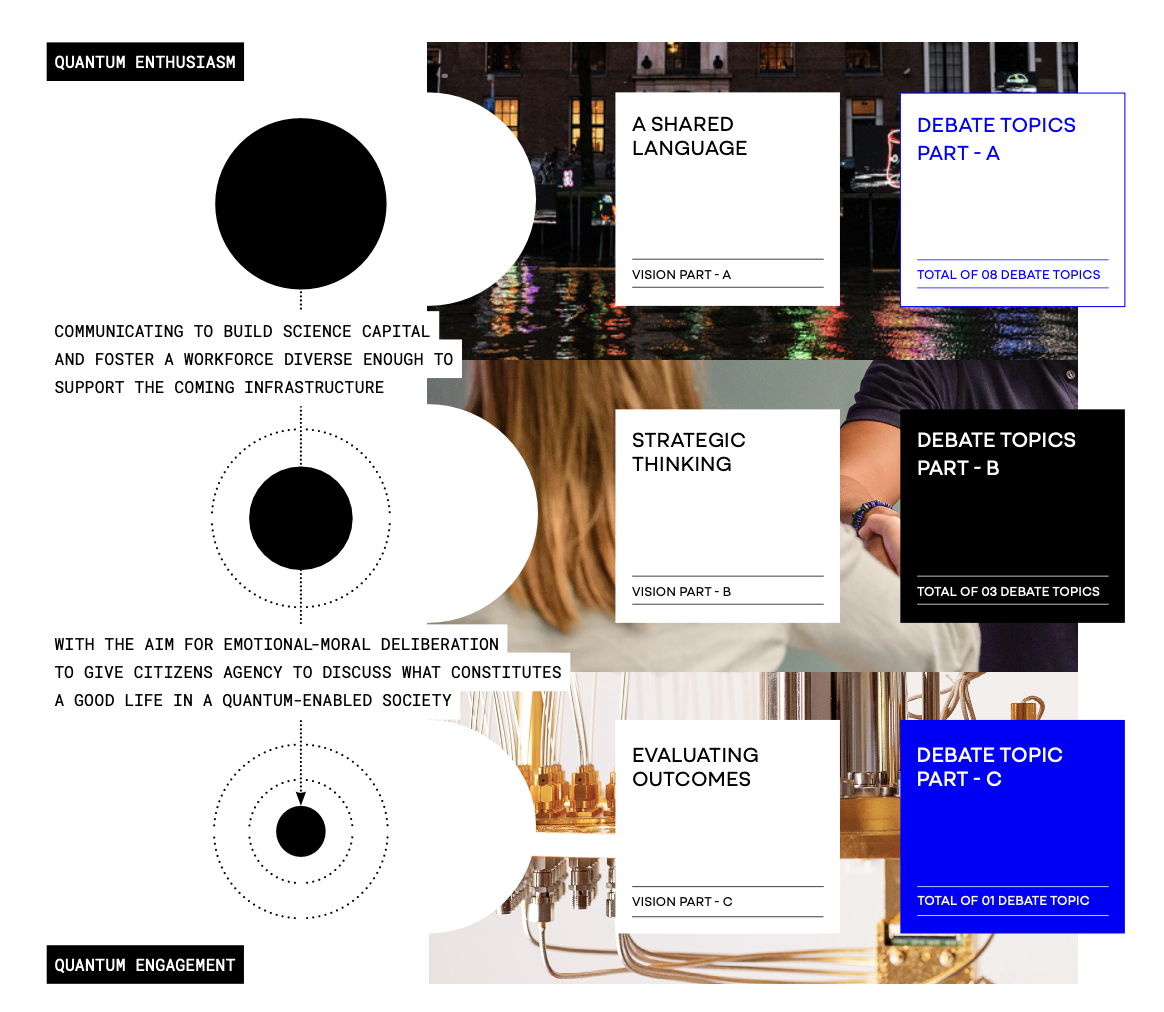
A shared language – developing communication that moves beyond technical jargon towards a model based on trust, agency and shared inquiry, enabling more people to participate in democratic discussions about quantum technologies.
Strategic thinking – designing communication with clearly defined objectives, tailored to different audiences, and evaluating success from the perspective of public engagement rather than expert expectations alone.
Evaluating outcomes – measuring the impact of communication activities not only through knowledge acquisition but also through changes in trust, attitudes, interest and people’s sense of agency.
The authors emphasise that communication activities should be evidence-based, build on previous experiences and be evaluated rigorously to understand what works in practice.
As quantum technologies continue to mature, the authors conclude that communication should be recognised as an essential component of responsible innovation. Building public trust and creating opportunities for meaningful societal dialogue will be as important to the future of quantum as scientific and technological advances themselves.


